FAQ
What exactly is Pilates?
Developed by Joseph Pilates over 100 years ago, Pilates is a movement method that builds core stability, strength, mobility, and body awareness through controlled, intelligent movement.
Is Pilates the same as yoga?
No. Yoga is an ancient Indian practice that includes movement, meditation, breathwork, ethics, and philosophy, with the aim of spiritual integration and mind–body harmony. Pilates is a modern method created for rehabilitation, strength, posture, and efficient body mechanics. While yoga often places greater emphasis on flexibility and holding poses, Pilates focuses on core strength, stability, alignment, and controlled, repetitive movement. Breathwork also differs: Yoga typically uses deep belly breathing or ujjayi breath during asana practice. Pilates uses lateral thoracic breathing (ribcage expansion), coordinated with core engagement.
Is Pilates just stretching?
No. It includes resistance training for the core, loaded stretches (especially on the Reformer), and a combination of strength, stability, and mobility work.
Is Pilates only for flexible people?
Not at all. Pilates meets you where you are. Flexibility develops over time through consistent practice.
Is Pilates only for women?
No. Pilates was originally designed for men and injured soldiers. Many male athletes practise it for improved strength, performance, and injury prevention.
Am I too old, unfit, or stiff for Pilates?
No. Pilates is designed to adapt to the individual and meet you at your current level.
Do I need any experience to start?
No. Beginners are welcome. Classes are mixed-level, and everyone works within their own capacity on any given day. You’ll be guided to progress or regress exercises based on how your body feels.
What is Reformer Pilates?
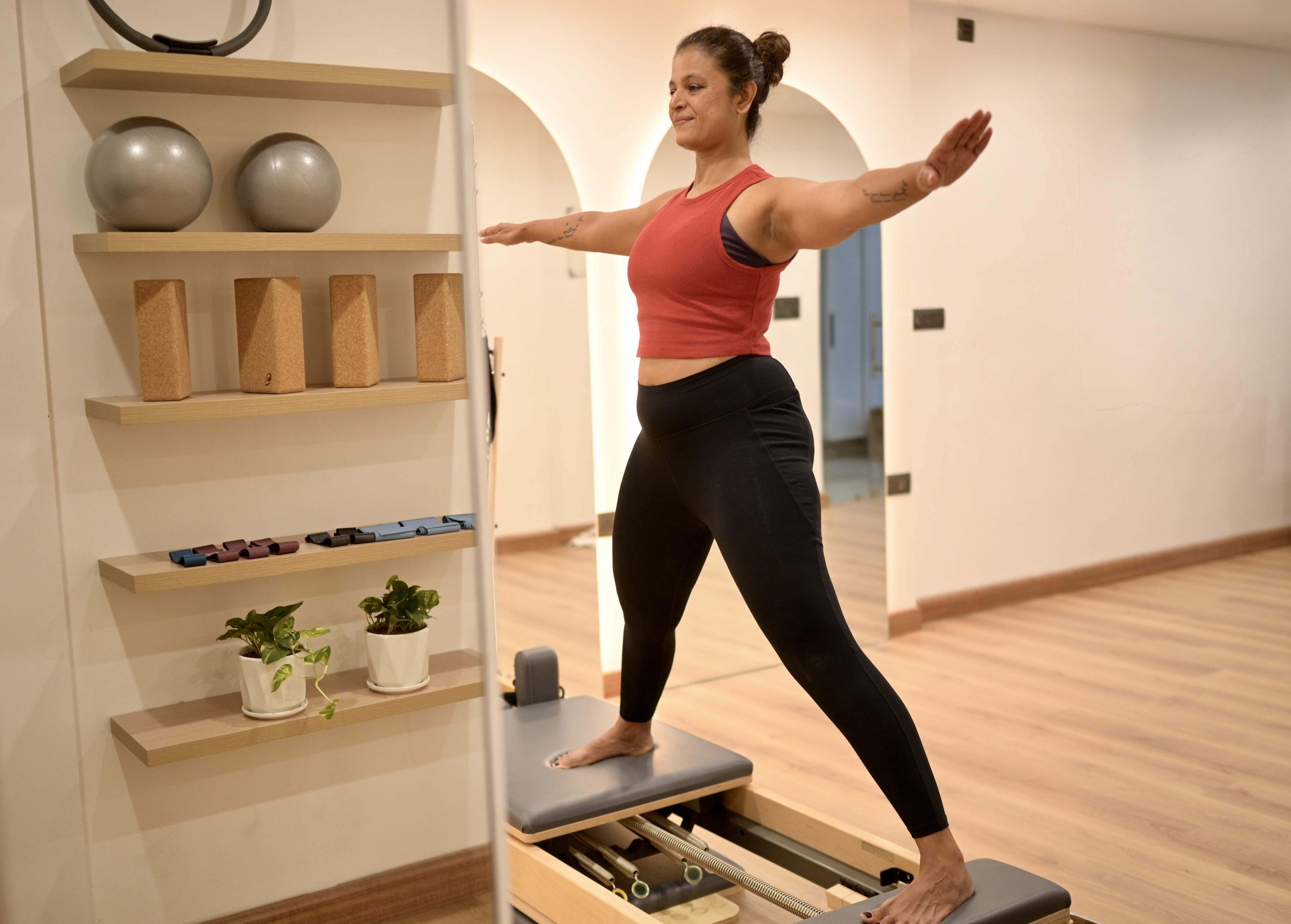
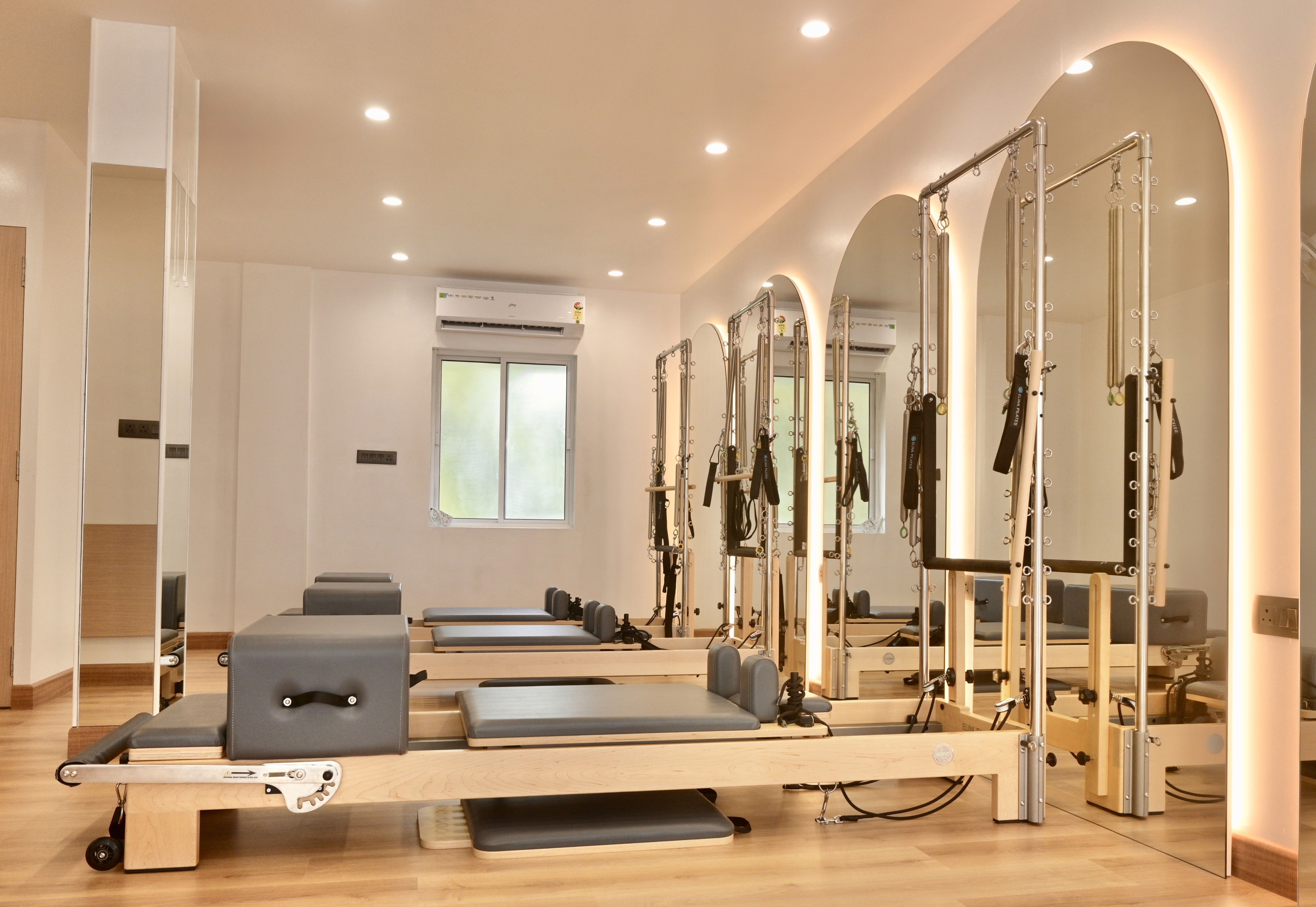
The Reformer is a Pilates machine with a moving carriage, springs, straps, and pulleys. The springs can add resistance or provide assistance, making exercises more challenging or more supportive depending on the movement and individual needs.
Will Pilates help me lose weight?
Pilates is not a high-calorie-burn workout like HIIT or heavy strength training. However, it can support weight loss when combined with a calorie-deficit diet and regular practice.
Will my body look different?
Yes. Most people notice improved posture, stability, mobility, muscle tone, and overall body shape.
What if progress feels slow?
Slow progress is often real progress — and it tends to last longer.
Will this help with stress eating, fatigue, or low energy?
Often, yes. Improved movement patterns and breathing can help regulate stress levels and energy.
What are the different types of Pilates?
Mat Pilates — Performed on the floor using bodyweight to build core strength, mobility, and alignment. Reformer Pilates — Uses a spring-based sliding carriage to add resistance, improving strength, control, and flexibility. Cadillac / Tower — A larger frame with springs and bars, ideal for assisted stretching, rehabilitation, and core work.
Is Pilates safe for prenatal and postnatal women?
Yes. When taught with proper guidance, modifications, and awareness, Pilates is one of the most supportive forms of movement during pregnancy and after birth.
Can I work out with an injury?
It depends on the injury and medical clearance. If your doctor or physiotherapist has approved movement, exercises can be modified appropriately. If an injury is active, painful, or unresolved, rehabilitation should be prioritised first. Always seek clearance before starting or resuming physical activity.
How often should I attend to see results?
Consistency matters more than intensity. With 2–3 sessions per week, most people begin to feel changes within 3–4 weeks and see visible results within 6–8 weeks.